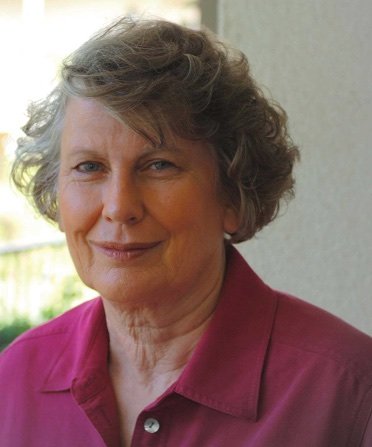
-
What inspired you to start writing?
I have wanted to write for as long as I can remember. I think my mother drove my desire, though oddly she discouraged me from ever embarking on a writing career. Though uneducated, she had an amazing innate talent for teaching creative writing. One of my earliest memories is of her coaching my cousin to write a story about a rabbit. She went down on all fours and hopped about the room, urging him to use more creative words to describe how she was moving.
Accepting my mother's advice that there was no way for a writer of fiction to make money, I moved into business and instructional writing after several years of stumbling about searching for work I could enjoy. I finally switched to fiction writing in retirement, and I now fervently wish I had started sooner, though I enjoyed a deeply satisfying career as a copywriter.
-
Can you tell us a little about your latest book?
"Will disputes are games of lies, but the dead sometimes tell tales", is the tagline of 'A Will of Deceit', a work of legal, family and psychological fiction likely to be enjoyed by readers who loved 'Big Little Lies' by Liane Moriarty, 'Sharp Objects' by Gillian Flynn, 'The Family Upstairs' by Lisa Jewell, or legal dramas like 'The Lincoln Laywer' by Michael Connelly.
A frame novel, 'A Will of Deceit' is narrated by an ambitious young female lawyer who takes on a client to contest a will, believing she can achieve an easy win. But the client proves to be a narcissistic manipulator who threatens the lawyer and her family, leading to exposure of truths that challenge everything the lawyer believed about herself and the justice system.
The inner story of this frame novel is loosely based on my mother's experiences, but heavily fictionalised.
Variously described as "a gripping, emotionally layered novel" and a "suspenseful exploration of inheritance, deception, and the moral complexities within the legal system", this work was reviewed by Alison Mackay, who remarked, "immediately struck by its psychological tension and moral depth. You’ve crafted more than a legal drama; it's a haunting reflection on ambition, justice, and human fallibility. Brittany’s descent into the tangled world of deception and inheritance law feels both thrilling and deeply human, reminiscent of 'Presumed Innocent' and 'Little Fires Everywhere', but with a sharper critique of moral corruption within power structures."
TRIGGER WARNING: This story might challenge everything you believed about the legal and justice system and those who serve it.
-
How do you create your characters?
I start the process of character creation by thinking of someone I know who might fit the role of Protagonist, Antagonist, Sidekick, Mentor, Foil, Confidante, etc. Then, I make a character profile, altering various facts and characteristics to fit the story in my head. I use a template that prompts me to think about their physical features, dress style, food tastes, hobbies, etc. Then, I use the 'Myers Briggs Personality Test' to create a psychological profile.
After the first couple of chapters, I find the characters come to life and tell me their story, correcting details I have noted about them. They follow me about the house when I'm doing chores and they tell me what to write about them. (Okay, that's insane. Aren't all writers of fiction just a little bit mad?)
-
What does your typical writing day look like?
I am totally undisciplined. I do everything a writer should not do. I write when I feel like writing. Often, I go for weeks not writing anything. Then, I might spend up to three days hours at my desk, frantically typing away and unaware of anything happening around me. I skip meals and rely on unscheduled snacks. I don't sleep, or if I do it's sporadic and I wake at crazy hours with an idea or a character conversation in my head and have to run to my desk to write it down before I forget it.
-
What has been the most rewarding part of being an indie author?
The messages from readers who enjoy reading my works delight me. There is noting quite like the thrill of hearing, "I loved reading your book. I couldn't put it down." The only other delight that comes close is that of holding a newly-published book in my hand.
-
What’s one challenge you’ve faced in your writing journey?
Marketing is my big challenge. I am hopeless at it, and a tight budget makes it a major challenge. I suspect that's a challenge many others find overwhelming. We are writers, not marketers. And we want to spend our time writing, not managing databases or managing email campaigns.
-
Do you have any favorite writing tools or apps?
I had a favourite, but sadly the creator has discontinued supporting it. 'Write It Now' was a brilliant concept and delivered amazing conveniences for authors. Thus far, I can't find a rival so I still use it even though it is technically now defunct.
-
What advice would you give to new or aspiring indie authors?
Read, read and read more. Read anything and everything, but focus most heavily on stories in the genre in which you prefer to write. And write every day, no matter what you write. Write in a diary or journal. Use prompts to write short, short stories. Join a writers' group either in person or online to find supportive critics. Find beta readers who are unrelated and not friends, but who like stories in the genre of yours.
Most of all, believe in yourself. Believe the world wants to read what you write, but only if it's well edited and professionally typeset. Engage help if you have to, but make sure what you release to the world is polished to perfection.
-
How do you handle book promotion as an indie author?
I don't - or at least not very well. I post on Facebook. I occasionally mention a book I've written to a friend - though I'm self-conscious about doing that. I upload to Amazon, of course. I occasionally try a book promotion site like this one. I am learning to make videos to upload to YouTube, hoping that might help sales.
-
What’s next for you? Are you working on a new book?
I am working on a memoir, and also a sequel to 'A Will of Deceit'. Both will take a while to complete. I am a slow writer.
I am also toying with the idea of writing a non-fiction book on money management. And I have written a book on making money betting on horses but it may never be published given that my husband supplied much of the content and he keeps stalling on approving it as ready to go.
-
Why do you write? What is it that drives you?
I write because I fervently believe there are things people need to know that are not widely exposed. The world has dark corners where light should be shone. There are unsung heroes whose names should be put up in lights. There are injustices and untruths that should be corrected. I write to 'nudge the world a little', in the fragile hope that something I write might one day touch someone in a positive way, and make a difference in their life - like the way my younger daughter's marathon running made a difference in the lives of a family with a very sick young child, or the way my mother's charity work made a difference in the lives of people in crisis. Their gifts had a positive impact on the lives of people facing challenges. I write in the hope that my words might do the same.